Leadership · 13 Nov 2026
Win a copy of PeopleEconomics® by Leah Akoka
🎉 GIVEAWAY 🎉
What if your team ran your business like they owned it?
That's the promise at the heart of PeopleEconomics® by Leah Akoka, and we're giving away a copy to one lucky leader.
For your chance to win:
1️⃣ Like this post
2️⃣ Like our page
3️⃣ Share this post and tag your friends in the comments (every tag is an extra entry!)
Know a founder, CEO or manager who's building a team? Tag them. This book was written for them.
Entries close Friday 20 November. Our team will contact the winner directly.
Get the weekly briefing
Culture · 9 Nov 2026
Culture drifts when nobody builds it on purpose
It doesn't take talent. It takes intention.
And intention is not the same thing as effort, which is where most people get stuck.
You can work extremely hard without it. You can be consistent, disciplined, in early and out late, and still be entirely unintentional about what you are actually doing.
I managed a woman early in my career who proved this better than anyone. Immaculate desk, piles for everything, first in and last out. Before every customer call came an elaborate ritual. Read the contract, study the advertisement, research the industry. Twenty minutes of preparation.
Then the customer would not answer, and all of it evaporated.
She had enormous discipline. She had applied it to the wrong thing. Her effort was real and her intention was absent, and the result was somebody exhausting themselves producing nothing.
That is far more common than laziness. And it is much harder to see, because from the outside it looks like commitment.
The leadership version is the expensive one.
Culture does not drift because leaders lack effort. Nobody is working less hard than they were five years ago. It drifts because nobody was intentional about building it.
The values got written and then left to interpretation. The standards were assumed rather than defined. The first 90 days were treated as an administrative process rather than the belief-forming window it actually is. What success looks like in each role was never made explicit, because everyone surely just knows.
None of that is neglect. All of it is activity without deliberateness.
And here is why the distinction matters so much. Unintentional environments do not stay neutral. They fill in. People draw conclusions from whatever evidence is available, and in the absence of a deliberate message they write one themselves. Usually a less generous one than you would have chosen.
So the question is not whether your business has a culture. It has one. The question is whether anyone built it on purpose.
Talent is a starting position you cannot change. Effort is table stakes. Intention is the only one of the three that is both available to everyone and almost never applied.
Where has your business been working hard without being deliberate?
#PeopleEconomics #Leadership #Intention #FounderMindset #OrganisationalCulture #LeadershipDevelopment #BusinessPerformance
Get the weekly briefing
Leadership · 8 Nov 2026
Happiness lives in the pursuit, not the summit
It's not the pursuit of happiness. It's the happiness of the pursuit.
The first version puts happiness at the end of something. A destination you arrive at once the conditions are met. Once the business hits the number. Once the team is right. Once the hard season is over.
Anyone who has actually arrived at one of those knows what happens next. The feeling lasts about as long as the applause, and then the measuring stick moves and you are back to pursuing again.
That is not a flaw in you. It is a flaw in the structure. You cannot store happiness at a destination, because the destination keeps relocating.
The second version puts it somewhere far more useful. In the climb itself.
And this is not a consolation prize for people who have not arrived yet. It is the better deal mathematically. The person who only loves the summit is miserable for the entire ascent and happy for a moment at the top. The person who finds genuine satisfaction in the climb is fulfilled the whole way up, and the summit turns up almost as a by-product.
Same mountain. Same effort. Completely different life.
I see the first version constantly in founders. Everything postponed to after the raise, after the exit, after the year gets easier. And underneath the ambition there is often a quiet assumption that the current chapter does not count. That it is something to be endured on the way to the chapter that does.
But you are going to spend the overwhelming majority of your life in pursuit of something. Almost none of it at a summit.
Which means a life organised around arrival is a life organised around the smallest fraction of itself.
There is a business version too. Teams celebrated only for outcomes learn to resent the process. Teams whose daily craft is seen and valued take pride in it. And pride in the process is the only sustainable engine of excellence, because the process is where your people actually live.
The outcome is one day. The pursuit is every day.
Build a life you would want even if the summit never arrived.
What are you currently enduring that you could be enjoying?
#PeopleEconomics #Leadership #FounderMindset #Purpose #GrowthMindset #Mindset #LeadershipDevelopment
Get the weekly briefing
Leadership · 5 Nov 2026
Bring your people problem and get a straight answer
The people problem you keep circling back to? Ask me.
Type it in a few lines on my website, no names needed. In about a minute you get a straight answer: what’s really going on, and what to do about it this week.
Free for my weekly briefing readers. Subscribe on the page, then ask.
Get the weekly briefing
Leadership · 5 Nov 2026
Ask Leah: somewhere to put the problem you keep circling
How many times this week did you explain the same thing twice?
Most founders I work with carry one people problem around for months. They turn it over in the car. At 2am. In the shower.
They don’t raise it with anyone. It feels too small for a consultant and too big to ignore.
So I built somewhere to put it.
Ask Leah is a page on my website. You type the problem in a few lines, no names needed. About a minute later you get a straight answer: what’s really going on, and two or three things to do about it this week.
It draws on PeopleEconomics®, NLP and the study of Behavioural Economics. The same lens I use with my clients.
It’s free for my weekly briefing readers. Not one yet? Subscribe on the page, then ask. The link is in the first comment.
The problem you keep circling is rarely the real problem. It’s usually the conversation you haven’t had yet.
Hook used: C, a question that names a pain. “Explaining the same thing twice” is a frustration founders say out loud, so the right reader recognises themselves before they decide to keep reading.
Get the weekly briefing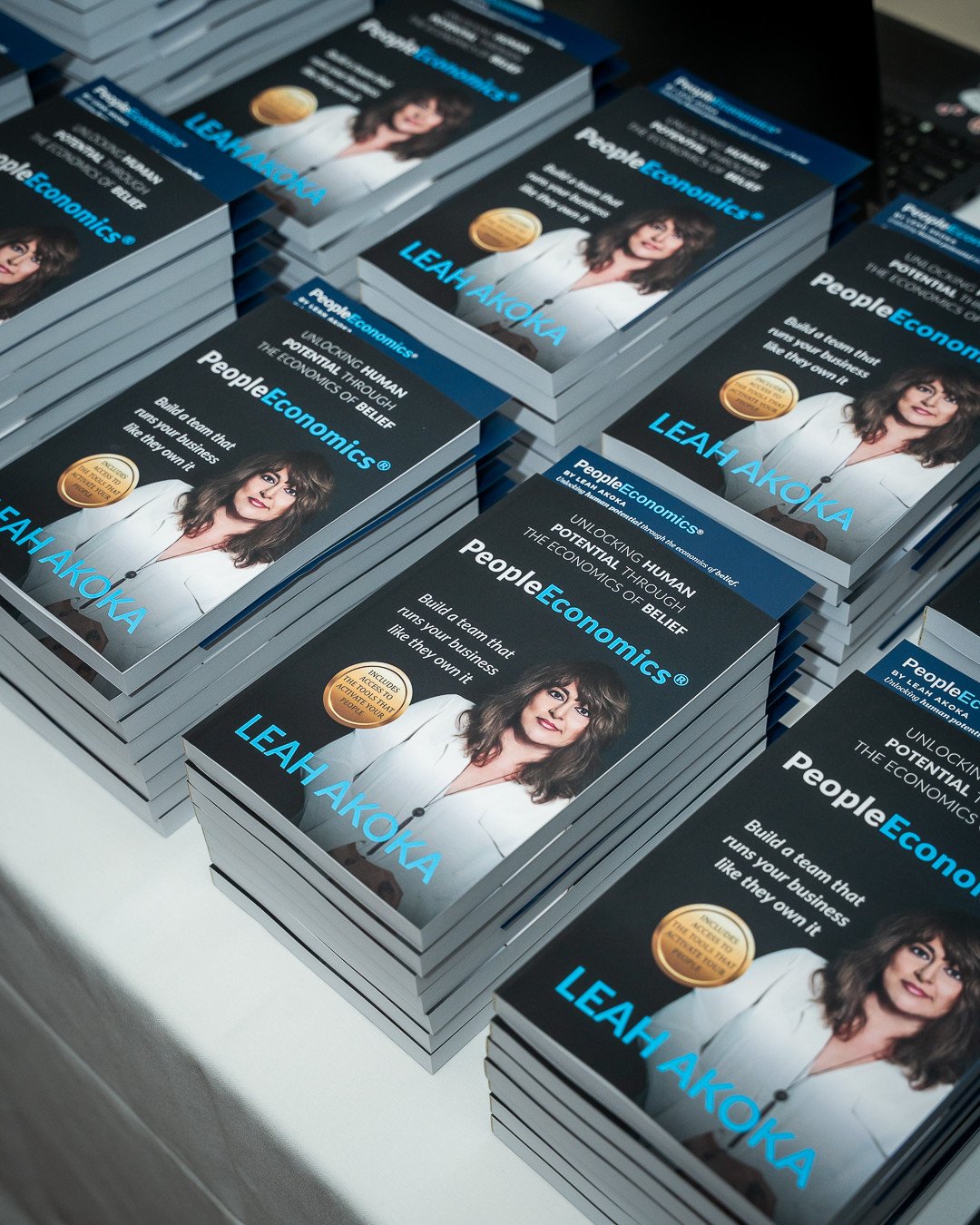
PeopleEconomics on Instagram · 2 Nov 2026
Leah's book PeopleEconomics® shares the system behind scaling Dodo, written for founders ready to stop being…
Leah's book PeopleEconomics® shares the system behind scaling Dodo, written for founders ready to stop being the bottleneck. Get your copy here https://www.amazon.com.au/gp/product/1764650409/ref=ox_sc_act_title_1?smid=ANEGB3WVEVKZB&psc=1.
View on Instagram
PeopleEconomics on Instagram · 30 Oct 2026
Every week I find something new AI can do for the business.
Most of it hasn’t come from a course or a consultant. It’s come from trying things, getting things wrong, swapping ideas with other business owners and figuring out what actually saves time or improves the way we work.
The businesses that get the most from AI will be the ones that make learning it part of the job.
View on Instagram
PeopleEconomics on Instagram · 28 Oct 2026
One of the best parts of implementing PeopleEconomics® is seeing the difference show up in the everyday.
Managers are having better conversations, teams are collaborating more naturally, expectations are clearer and people are working with a stronger sense of where the business is going.
That’s when you know a framework is doing its job - not because it looks good on paper, but because the business starts to feel and operate differently.
View on Instagram
Leadership · 27 Oct 2026
Trust travels back down a channel you open
Trust your people if you want them to trust you.
You cannot ask for trust. And a surprising number of leaders spend their careers trying.
My door is always open. You can be honest with me. I want to hear what you really think. There are no bad ideas in this room.
Every one of those is a request. And trust does not respond to requests, because it is not a thing a person can decide to give you. It is a conclusion they arrive at, slowly, from evidence.
The only evidence that produces it is watching you trust them first.
This is the part that catches leaders out. They believe trust is something they earn through competence, transparency, or good communication. Those help. But none of them answer the question the other person is actually asking.
Does this person believe in me?
Because trust travels back down a channel someone else opened. The person who feels trusted reciprocates almost automatically. The person who feels monitored, second-guessed, or managed does not, no matter how open the door is or how many times they are invited to be honest.
And the gap between those two experiences is created in very ordinary moments.
The decision you handed over without needing to approve it. The project you gave to someone before they had technically earned it. The mistake you examined rather than punished. The time you did not check in, deliberately, because checking in would have signalled doubt.
None of those involved saying the word trust. All of them communicated it.
Meanwhile the leader with the open door who reviews every email before it goes out has already answered the question, and the answer was no.
Here is the uncomfortable asymmetry. Somebody has to move first, and it cannot be them. They do not control the conditions. You do. Which means every leader waiting for their team to trust them is waiting for something that cannot arrive until they have done the thing that produces it.
Extend it before it feels safe. That is the entire mechanism.
Where are you asking for trust you have not yet given?
#PeopleEconomics #Leadership #Trust #FounderMindset #TeamCulture #LeadershipDevelopment #PeopleFirst
Take the free Morale Audit
PeopleEconomics on Instagram · 26 Oct 2026
Hiring great people is expensive. Losing them six months later is even more expensive.
When someone leaves during probation, don’t just replace them and move on. Look at what happened after they joined - the support they received, the tools they were given, the leadership around them and whether the reality of the culture matched what they were sold.
Retention starts long before someone decides to resign.
View on Instagram
Leadership · 26 Oct 2026
Every number on your P&L is a human decision
If you don’t understand people, you don’t understand business.
Strip a business down to what it actually is and you find people making decisions about other people.
A customer deciding whether to trust you. An employee deciding how much of themselves to bring. An investor deciding whether you are credible. A supplier deciding whether to prioritise your order. A candidate deciding whether to accept.
Every single number on your P&L is downstream of a human decision, and none of those decisions were made the way your financial model assumes they were.
Because people do not decide with the logical brain. They decide with the limbic system, which runs on feeling, safety and threat, and then the logical brain assembles a justification afterwards.
Watch it in a resignation. Ask why someone left and you get a perfectly rational answer. The salary. The commute. A better opportunity. All of it sounds like analysis. All of it is justification. The actual decision was made months earlier when something shifted in how they felt about being there, and the feeling then went looking for logic. The same salary that was fine for two years suddenly became not enough.
The same mechanism runs every other decision in your business.
Your customer did not buy because your features were objectively superior. They bought because of how they felt about you, and then listed the features as reasons. Your best candidate did not decline because of the package. They declined because something in the process told them how they would be treated here.
And this is why so many technically excellent leaders underperform. They are optimising a system they have misunderstood at the foundational level. Better logic. Sharper analysis. Clearer presentations. All aimed at the part of the brain that explains decisions rather than the part that makes them.
I did not start out understanding this. I learned it selling, where you find out very quickly that the best argument does not win. The person who feels understood wins.
Business is not an intelligence test. It is a human system wearing a spreadsheet.
Understand the people and the numbers follow. Understand only the numbers and you will spend your career being surprised by them.
Which one have you been studying?
#PeopleEconomics #Leadership #FounderMindset #BusinessPerformance #HumanBehaviour #LeadershipDevelopment #EmotionalIntelligence
Try the Limbic Language Translator
PeopleEconomics on Instagram · 23 Oct 2026
Clarity is one of the simplest ways to improve performance.
When employees understand exactly what’s expected of them, they can focus their energy in the right places instead of second-guessing what “good” looks like. That’s a big part of what the PeopleEconomics® framework is designed to create - clear expectations, open communication and a stronger foundation for trust.
View on Instagram
Culture · 22 Oct 2026
Disconnection is a measurable problem, not a soft one
Johann Hari said the opposite of addiction is not sobriety. It is connection.
His argument, drawn from decades of research into why people become dependent on things, was that we had been studying the substance when we should have been studying the circumstances. People who are deeply connected to others, to purpose, to a life that feels worth being present for, are far less likely to reach for something to fill a gap. The gap was always the issue.
I am not going to stretch that into a claim about workplaces that it does not support. Addiction is its own serious subject and deserves to be left intact.
But the mechanism underneath Hari's point is worth sitting with, because it shows up in places nobody looks for it.
Disconnection is not a soft problem. It is a measurable one.
The Harvard Study of Adult Development has followed the same people for nearly nine decades. Its most consistent finding was that good relationships keep us happier and healthier. Period. And the study found that loneliness carries a health risk comparable to smoking.
Now consider that most adults spend the majority of their waking hours at work, and that we have spent decades treating connection there as a nice-to-have. Something that happens at the Christmas party. Decoration around the real business.
The same research found that a single trusted colleague reduces stress, increases engagement, and changes a person's entire daily experience.
One person. One genuine connection.
And yet businesses design for everything except that. The systems, the efficiency, the automation of the interactions that used to be human. Every one of those decisions is defensible in isolation, and collectively they remove the exact thing people most need from a place where they spend the bulk of their lives.
The lesson I take from Hari is not about substances. It is about where we look for causes.
When something is not working with people, the thing in front of you is rarely the thing. Look for the gap underneath it.
Does anyone at your workplace actually know your people?
#PeopleEconomics #Leadership #Connection #TeamCulture #FounderMindset #Wellbeing #LeadershipDevelopment
Take the free Morale Audit
PeopleEconomics on Instagram · 21 Oct 2026
Culture problems rarely announce themselves as “culture problems”.
They show up as inconsistent leadership, low accountability, poor communication, disengagement and teams pulling in different directions.
That’s why culture needs more than good intentions. You need clear purpose, defined behavioural standards and a way to measure whether the business is actually operating the way it says it does.
View on Instagram
Leadership · 19 Oct 2026
Silence is a message your people read
We are always communicating.
There is no neutral setting. No moment where a leader is simply present without transmitting something.
Most leaders believe communication is the things they deliberately say. The email, the meeting, the town hall, the strategy update. Those are the communications, and everything in between is just the day happening.
Your people are receiving the opposite.
They are receiving the meeting you cancelled for the third time. The question you answered while looking at your phone. The idea you did not respond to at all. The person whose contribution you walked past without acknowledging.
You said nothing in any of those moments. You communicated something in every single one.
This is why so many leaders are confused about their own culture. They audit what they said and find it entirely reasonable. The values were communicated clearly. The direction was explained. The commitment to people was stated at every opportunity.
Meanwhile the real message was assembled from a thousand things nobody drafted.
Because silence is never read as nothing. Silence after a survey means your voice does not change anything here. Silence after someone raises a problem means do not raise problems. Silence while a standard is broken means the standard is optional. In the absence of a message, people write one, and the one they write is almost never generous.
And your limbic system has been picking up these signals in others since you were a child. So has theirs. Nobody has to think about it. The conclusion simply forms.
So the practical shift is this. Stop auditing what you say and start auditing what you transmit.
Look at your week. The things you responded to immediately and the things you let sit. Who got your attention and who got your distraction. What you reacted to and what you let pass without comment.
Every one of those was a message. Your people have already received all of them.
The only question is whether you sent them on purpose.
What did your behaviour communicate this week that your words did not?
#PeopleEconomics #Leadership #Communication #FounderMindset #TeamCulture #LeadershipDevelopment #BusinessPerformance
Get the weekly briefing
PeopleEconomics on Instagram · 19 Oct 2026
We spend a lot of time worrying about saying the “right” thing, when a better question is: how do I want this…
We spend a lot of time worrying about saying the “right” thing, when a better question is: how do I want this person to feel at the end of the conversation?
Once you’re clear on the outcome, the words usually come much more naturally. You listen differently, respond differently and stop sounding like you’re working your way through a script.
People rarely remember the exact words anyway. They remember how the conversation made them feel.
View on Instagram
Leadership · 19 Oct 2026
Every number on your P&L is a human decision
If you don’t understand people, you don’t understand business.
Strip a business down to what it actually is and you find people making decisions about other people.
A customer deciding whether to trust you. An employee deciding how much of themselves to bring. An investor deciding whether you are credible. A supplier deciding whether to prioritise your order. A candidate deciding whether to accept.
Every single number on your P&L is downstream of a human decision, and none of those decisions were made the way your financial model assumes they were.
Because people do not decide with the logical brain. They decide with the limbic system, which runs on feeling, safety and threat, and then the logical brain assembles a justification afterwards.
Watch it in a resignation. Ask why someone left and you get a perfectly rational answer. The salary. The commute. A better opportunity. All of it sounds like analysis. All of it is justification. The actual decision was made months earlier when something shifted in how they felt about being there, and the feeling then went looking for logic. The same salary that was fine for two years suddenly became not enough.
The same mechanism runs every other decision in your business.
Your customer did not buy because your features were objectively superior. They bought because of how they felt about you, and then listed the features as reasons. Your best candidate did not decline because of the package. They declined because something in the process told them how they would be treated here.
And this is why so many technically excellent leaders underperform. They are optimising a system they have misunderstood at the foundational level. Better logic. Sharper analysis. Clearer presentations. All aimed at the part of the brain that explains decisions rather than the part that makes them.
I did not start out understanding this. I learned it selling, where you find out very quickly that the best argument does not win. The person who feels understood wins.
Business is not an intelligence test. It is a human system wearing a spreadsheet.
Understand the people and the numbers follow. Understand only the numbers and you will spend your career being surprised by them.
Which one have you been studying?
#PeopleEconomics #Leadership #FounderMindset #BusinessPerformance #HumanBehaviour #LeadershipDevelopment #EmotionalIntelligence
Try the Limbic Language Translator
PeopleEconomics on Instagram · 15 Oct 2026
Businesses can drown in data pretty quickly. The problem isn’t usually a lack of metrics - it’s a lack of…
Businesses can drown in data pretty quickly. The problem isn’t usually a lack of metrics - it’s a lack of clarity around which ones actually matter.
If you can identify the one to three foundational measures that genuinely drive performance, you can focus your energy on the levers you can influence rather than reporting endlessly on outcomes you can’t directly control.
More data doesn’t always mean better decisions. Better measures do.
View on Instagram
Leadership · 15 Oct 2026
You have to show up to win
You have to show up to win. If you're not in the room, you aren't playing.
Most of the opportunities I have had did not arrive because I was the best option available. They arrived because I was the option that was there.
That is less a comment on merit than it sounds. Merit matters enormously. But merit cannot be assessed in absentia. The room does not know what you are capable of if you are not in it, and it makes its decisions from whoever showed up.
And people do not show up for reasons that always sound sensible at the time.
I am not ready yet. I will go once I have more experience. I do not know anyone there. I would not have anything useful to contribute. It is not really for someone at my level.
Every one of those is a decision to not play, made in advance, on your own behalf, before anyone else had a chance to decide anything about you.
The uncomfortable part is how reasonable each one sounds. Not-showing-up almost never feels like avoidance from the inside. It feels like timing. Like judgement. Like being appropriately realistic about where you currently sit.
But run the mathematics the same way you would run it on a swing of the bat. Being in the room has two possible outcomes. Something comes of it, or nothing does. Not being in the room has one. Guaranteed.
And showing up compounds in a way nothing else does. The room you walk into unknown is the room where, three years later, someone remembers you. The conversation that went nowhere introduces you to the person who matters later. The event you nearly skipped produces the client you still have.
None of that is visible at the time. It is only ever visible backwards.
There is a leadership version too, and it is the one most founders underestimate. Showing up for your people is the same principle. The meeting you attend rather than delegate. The site visit. The conversation you have in person because it matters. Presence is not a soft gesture. It is the thing that makes everything else you say credible.
You cannot win a game you are not in. And you cannot be chosen from a room you did not enter.
Show up before you feel ready. That is the entire strategy.
What room have you been talking yourself out of?
#PeopleEconomics #Leadership #FounderMindset #ShowUp #GrowthMindset #Opportunity #LeadershipDevelopment
Get the weekly briefing
Leadership · 14 Oct 2026
Everyone wears a lens, so choose the useful one
We should always be wearing rose coloured glasses.
I know exactly how that sounds. Rose coloured glasses means delusion. Ignoring reality. The accusation levelled at anyone who refuses to be appropriately grim about things.
Stay with me, because the accusation contains an assumption that does not survive examination.
The assumption is that the pessimist is seeing reality and the optimist is distorting it.
Neither of them is seeing reality.
Your brain takes in roughly two million bits of information every second and consciously processes around 134 of them. That is 0.0067% of what is available. Everything you experience as the situation, the market, the team, the business, is assembled from a sliver of what is actually there.
And the sliver is not selected at random. It is selected by what you already believe.
Which means the person calling themselves a realist is not viewing the world without a lens. They are wearing one and calling it clear vision. Their filter is admitting the risks, the obstacles, the reasons it will not work, and faithfully discarding the openings sitting in the other 1,999,866 bits.
Both people are wearing glasses. Only one of them admits it.
So the question is not whether to filter. You have no choice about that. The question is which filter produces better outcomes with the same available information.
Before 1954 every expert knew the four minute mile was impossible. The charts, the physiology, the data all agreed. Roger Bannister wore different glasses, ran 3:59.4, and within three years sixteen people had followed him through a barrier that had never been physical.
Their bodies did not change. Their filter did.
Now, this is not an argument for ignoring problems. Clear eyes on what is actually happening is non-negotiable. The difference is what you do with the same facts. Pessimism takes a difficult quarter and selects for evidence of decline. Optimism takes the identical quarter and selects for what is still working and what could be built from it.
Same quarter. Same numbers. Two completely different sets of options becoming visible.
You are wearing a lens today whether you chose it or not.
Choose the one that shows you more.
#PeopleEconomics #Leadership #FounderMindset #Belief #GrowthMindset #Optimism #LeadershipDevelopment
Get the weekly briefing
Leadership · 13 Oct 2026
Unranked priorities hand the decision to your team
When everything is a priority, your team decides what actually matters. Not you.
Most leaders would be uncomfortable with that sentence. Almost all of them are living it.
Because when a leader hands down five priorities, a team cannot physically deliver five priorities. So somebody resolves the contradiction. And it is never the leader, because the leader does not experience the contradiction. They experience a list.
The person closest to the work experiences it daily. Which thing gets done first. What gets dropped. What quietly slides to next week again.
And they resolve it with the only information available. Whatever was asked for most recently. Whatever the loudest stakeholder is chasing. Whatever will generate the least trouble if it is late.
That is not strategy. That is triage by volume. And it is happening in businesses right now, below the visibility line, with nobody aware that it has replaced the actual priorities.
I have sat with founders genuinely frustrated that their team is not focused on what matters, who have never ranked anything in their life. Everything was urgent. Everything was important. The ranking got delegated by accident, to people who had no mandate to make it.
Here is why this is specifically a leadership problem rather than an execution one.
Ranking priorities is uncomfortable. It means saying this matters more than that, out loud, to the person whose work just got deprioritised. It means killing something good. It means being accountable for a choice rather than hiding behind a list where everything is equally important and therefore nothing can be criticised.
An unranked list protects the leader. It costs the business enormously.
So the discipline is not better communication of priorities. It is the far harder work of actually having one.
What is the single most important thing this quarter? Not the five. The one. Then rank everything else beneath it honestly, and tell your team exactly what gets sacrificed when the week gets tight.
That is not restrictive. It is the most freeing thing you can give a team, because it ends the daily guessing about what you actually wanted.
Could every person on your team name the number one priority right now? And would they all say the same thing?
#PeopleEconomics #Leadership #Focus #FounderMindset #BusinessPerformance #LeadershipDevelopment #Priorities
Try the Clarity Builder
PeopleEconomics on Instagram · 12 Oct 2026
Asking a team to perform without sharing the bigger picture is a bit like asking people to build a house…
Asking a team to perform without sharing the bigger picture is a bit like asking people to build a house without showing them the plans. Everyone might be working hard, but they’re making decisions in isolation and relying on constant direction to know what comes next.
When people understand where the business is heading, what success looks like and how their role contributes, they can make better decisions, take more ownership and work with a lot more confidence. That’s what alignment really gives you - a team that knows what they’re building and why it matters.
View on Instagram
Leadership · 12 Oct 2026
Stop apologising for raising the bar
We should stop apologising for raising the bar.
Listen to how leaders introduce a higher standard now. Sorry to add to your plate. I know everyone is stretched. I hate to ask, but.
Every one of those phrases does the same thing. It frames the standard as an imposition rather than an expectation. And once that framing lands, the standard arrives already weakened, apologised for before anyone was asked to meet it.
I understand how we got here. Leaders are genuinely conscious of burnout. Nobody wants to be the one adding pressure to people already carrying a lot. The apology comes from care.
But it communicates something quite different from care.
It tells people that excellence here is a favour rather than the way things are done. It suggests that you are not entirely confident the standard is reasonable. And most damagingly, it signals that this place does not expect much, which is the single least motivating message a workplace can send.
Nobody chooses to be ordinary. The want to matter, to be capable, to do something worth doing, is in every person you lead. It is not a trait of high performers. It is a trait of human beings.
Raising the bar is not something you do to people. It is something you offer them. The chance to be part of something that holds itself to a standard worth belonging to.
And in my experience, a high bar held consistently is one of the most engaging environments a person can work in. What people actually resent is not the standard. It is the unfairness around it.
That is the distinction most leaders miss. People do not object to a high bar. They object to a high bar applied selectively, to one that moves without warning, to one demanded of them and quietly waived for someone with good numbers, or to one set without the resources and development to reach it.
Fix those and the apology becomes unnecessary, because the standard is self-evidently fair.
So raise the bar. Be specific about what it is and why it matters. Hold it for everyone, including the people it is inconvenient to hold it for. Give people what they need to reach it.
And then stop apologising for expecting something of people who wanted to matter in the first place.
What standard have you been softening that your people would actually rise to?
#PeopleEconomics #Leadership #HighStandards #FounderMindset #TeamCulture #LeadershipDevelopment #BusinessPerformance
Get the weekly briefing
Leadership · 11 Oct 2026
Leadership is about not having to pretend
Leadership is about not having to pretend.
Most leaders are performing. Not deliberately, and not dishonestly. They simply inherited a model of what a leader is supposed to look like, and they have been maintaining it ever since.
Certain. Composed. In possession of the answer. Never visibly uncertain, never visibly wrong, never the person in the room who does not know.
That performance is exhausting. And it costs far more than the energy it consumes.
Because the leader who cannot admit uncertainty cannot ask for input. The one who cannot be wrong cannot receive feedback. The one who must have the answer cannot develop anyone, because developing people requires letting them find answers you already have.
Every element of the performance removes a capability the business actually needs.
And it is contagious in a way most leaders never trace back to themselves. If you cannot be uncertain in front of your team, they cannot be uncertain in front of you. If your mistakes are managed rather than named, theirs will be hidden rather than surfaced. People do not follow what you say about psychological safety. They follow what they watch you model.
I have sat with founders who maintained the composed version for so long that the gap between who they presented and who they actually were had become unbridgeable. They could not have an honest conversation with their own team, because honesty would have required admitting the performance had been running for years.
The alternative is not weakness, and that is where leaders get nervous. Dropping the pretence does not mean becoming uncertain, unstructured, or emotionally unloaded onto your team. It means being one person rather than two.
Same person in the boardroom and the corridor. Able to say I do not know, and I got that wrong, and I need help with this, because none of those statements threaten an identity that was never built on performing certainty.
And here is the return. All the energy currently spent maintaining the image goes back into the work. Your people stop decoding you and start trusting you. The information flows honestly, because nobody is managing the message upward anymore.
Pretending is a full time job that produces nothing.
The strongest leaders I know are not the most impressive. They are the most unguarded.
What are you still pretending about?
#PeopleEconomics #Leadership #Authenticity #FounderMindset #LeadershipDevelopment #PsychologicalSafety #TeamCulture
Get the weekly briefing
Morale · 10 Oct 2026
You don't fix high sick leave with flu shots
You don't fix high sick leave with flu shots.
I worked with a national retail group running 28 stores and 420 staff. Absenteeism was sitting at 14%. Turnover at 52% annually.
They had tried everything the conventional playbook offers. Higher wages. Bonuses. Better rosters. All of it reasonable. None of it moved the number.
Because none of it touched what was actually happening.
Their people had no emotional connection to what they were doing or why it mattered. No sense that anyone was invested in who they were becoming. Just a shift, repeated, in a business that had never given them a reason to want to be there.
When that connection was rebuilt, absenteeism dropped from 14% to 3.4%. Turnover fell from 52% to 14%.
The wages had not changed. What changed was what people believed about being there.
Here is why this matters far beyond sick leave. Because almost every HR metric in your business is a symptom being treated as a diagnosis.
High absenteeism gets a wellness programme. High turnover gets a retention bonus. Low engagement scores get a culture initiative. Poor collaboration gets a team building day. Every one of those responses treats the number as the problem, when the number is only ever the evidence.
And this is the specific trap. Symptom-level fixes produce exactly enough movement to feel like progress. The wellness programme gets good attendance. The bonus retains someone for another quarter. The culture day generates genuinely positive feedback. All of it looks like it worked.
Meanwhile the underlying condition continues completely untreated, and the metric quietly returns within two quarters.
The question worth asking of any people metric is the same one every time. Not how do we move this number. But what is this number actually telling us about what our people believe?
Because people who believe their work matters, who feel known, whose potential is being invested in, do not call in sick at 14%.
Not because they are healthier. Because they want to be there.
What symptom is your business currently treating as the problem?
#PeopleEconomics #Leadership #EmployeeEngagement #FounderMindset #BusinessPerformance #LeadershipDevelopment #TeamCulture
Take the free Morale Audit
PeopleEconomics on Instagram · 9 Oct 2026
Core values only matter if people can see them in action.
You can talk about safety, respect, accountability or growth as much as you like, but if the behaviour inside the business tells a different story, people notice. And once that gap appears, trust starts to erode.
Culture is shaped far more by what leaders model, reward and tolerate than by what’s written on the wall.
View on Instagram
Leadership · 9 Oct 2026
Success lives in the small things nobody notices
Success means you put your all into the small things that others don't think matter.
That is almost the entire gap between people, and it is hiding in plain sight.
At 16, packing boxes in a warehouse at night, my job was to take the packing slip, fill the box, and move on. Nobody was watching. Nobody would have noticed if every order went out adequately rather than beautifully. The task was so small that caring about it would have looked faintly ridiculous.
So I asked the retailers who came to collect how I could make their lives easier. One handed me a cardboard template so I could fold his t-shirts his way. Another showed me exactly how she wanted her dresses rehung.
Two weeks later my boss drove to the warehouse at night to find out why customers were calling to tell him that the best employee in his business was the packer.
Nothing about that job changed. What changed was how much of myself I put into something nobody thought was worth that attention.
Here is why this works, and it is not sentiment.
The small things are uncontested territory. Everyone competes on the big, visible, obviously-important work, because that is where the recognition is. Almost nobody competes on the invisible details. So the entire field is empty, and the person who shows up there has it to themselves.
And the small things compound in a way the big ones do not. One beautifully packed order changes nothing. A thousand of them builds a reputation that arrives at your boss before you do.
The leadership version matters even more. Because your culture is not built in the strategy day. It is built in the small things nobody put on an agenda. The acknowledgement given or withheld. The standard held on a quiet Tuesday. The commitment kept when forgetting it would have cost you nothing.
Your people are collecting those moments. They are not collecting your town hall.
The little things are only little to the person who does not have to receive them.
What small thing have you been doing adequately that deserves everything you have?
#PeopleEconomics #Leadership #FounderMindset #Excellence #LeadershipDevelopment #Consistency #TeamCulture
Get the weekly briefing
Morale · 8 Oct 2026
Fix the reason, not just the hours
Striving for work life balance leads to hating your job.
Not because boundaries are wrong. Because of what the phrase quietly assumes.
Balance assumes two things sitting on opposite sides of a scale. Work on one side. Life on the other. And the implication buried in that image is that work is the thing you need protecting from.
Once a person accepts that frame, something follows automatically. The 40 hours become a cost. A tax paid in exchange for the real life that starts at six. And every hour spent at work is now, by definition, an hour not spent living.
That is a quietly miserable way to spend most of your waking existence. And it is not a scheduling problem. No amount of flexibility fixes a job you have already classified as the thing you escape from.
This is where most businesses respond to the wrong signal. They hear balance and they install perks. Flexible hours. Wellness programmes. Four day weeks. All of which treat the symptom while leaving the diagnosis completely untouched.
The diagnosis is that the work does not mean anything to the person doing it.
Because here is what I have observed across decades of this. People who understand why their work matters do not count down. People who feel genuinely known do not experience their workplace as something to be endured. People whose potential is being invested in are not waiting for six o'clock, because the thing happening at work is also their life, not a deduction from it.
That is not an argument for overwork. It is the opposite. Leaders who demand more hours from people who are already counting them down are just increasing the tax rate on a cost nobody wanted to pay.
The question is not how do we help our people balance work against life.
It is why has work become the thing they need balancing against.
Answer that and the scheduling conversation changes entirely. Answer only the scheduling and you have a well-rested workforce that still cannot wait to leave.
Is your business fixing the hours or fixing the reason?
#PeopleEconomics #Leadership #WorkLifeBalance #FounderMindset #TeamCulture #EmployeeEngagement #LeadershipDevelopment
Take the free Morale Audit
PeopleEconomics on Instagram · 7 Oct 2026
You can’t build culture with perks.
You build it in the everyday stuff - how leaders behave, how people are treated, what gets rewarded and whether the values on the wall actually show up in practice.
View on Instagram
Productivity · 7 Oct 2026
Wishing is effort pointed at everything except the work
You get what you work for, not what you wish for.
The uncomfortable part is how similar the two feel from the inside.
Wishing is active. It involves thinking about the thing constantly, researching it, planning for it, discussing it with people. It generates genuine emotion. It occupies real mental space. It feels, in every way, like progress.
It produces nothing.
I watched this up close early in my career with a woman I managed. She was the hardest worker in the office. In early, stayed late, immaculate desk with piles for everything. Before every customer call came an elaborate ritual. Read the contract, study the advertisement, research the industry. Twenty minutes of preparation.
Then the customer would not answer, and all of it evaporated.
Her results were terrible. Not because she was lazy. Because her effort was pointed at everything except the one activity that produced the outcome. The phone in her hand.
That is wishing with a work ethic attached. And it is more common than genuine laziness by a very large margin.
The gap between wishing and working is not effort. It is direction. Wishing is effort applied to everything adjacent to the outcome. Working is effort applied to the outcome itself, usually in its least enjoyable form.
When I set a national sales record and someone asked what made me so good, the honest answer was that nothing magic was involved. It was consistency, and the determination to not leave each day until I had achieved what I needed to achieve that day. No preparation ritual. No perfect conditions. Just the actual work, done daily, including on the days that gave me every reason to skip it.
The thing most people never do is run the audit honestly. Take the outcome you want. Then look at what you did last week and ask how much of it was the actual work versus preparation for the actual work, discussion about the actual work, or organisation of the actual work.
For most people the answer is uncomfortable.
Wishing is comfortable because it cannot fail. Working can. That is exactly why one of them produces results and the other produces a very full calendar.
What have you been preparing for that you have not started doing?
#PeopleEconomics #Leadership #FounderMindset #Discipline #Consistency #GrowthMindset #LeadershipDevelopment
Get the weekly briefing
Morale · 6 Oct 2026
Happiness is not the same as productive morale
Happiness is not the same as success. And confusing them costs businesses more than almost any other mistake.
Walk into most workplaces claiming a great culture and you will find happiness. The foosball table. The Friday drinks. The catered lunches. People who genuinely enjoy being there.
And productivity sitting exactly where it has always sat.
Because a great place to work is not the same thing as a place where great work happens. Happiness moves with perks. Performance does not.
Harvard research found that average businesses extract 65% productivity from their people while the best reach 85%. That gap is not closed by making work more pleasant. It is closed by something more specific, and it is regularly confused with happiness because the two can look identical from the outside.
Productive morale is not whether people enjoy their workplace. It is whether they believe the work is worth their best.
Those are different states entirely. A person can like their colleagues, attend every team event, and still be doing precisely the minimum. They can be perfectly content and completely uninvested. Happy, and quietly updating their CV on a Friday afternoon.
Productive morale is built from things that have nothing to do with enjoyment. Whether people understand why the work matters. Whether they own the outcomes rather than just execute them. Whether they feel genuinely known. Whether their potential is being invested in. Whether it is safe to fail intelligently.
When those conditions exist, something happens that no perk has ever produced. People bring more of themselves than the job description required.
And here is the part leaders find most uncomfortable. Productive morale sometimes costs happiness in the short term. The honest feedback that stings. The standard held with a high performer who broke it. The difficult conversation had rather than avoided.
None of those make anyone happier on the day. All of them build the belief that this place is serious about what it says it values.
So stop measuring whether your people are happy. Measure whether they believe their contribution matters here.
Happiness is a pleasant by-product. Belief is the engine.
What does your culture actually produce? Not feel. Produce.
#PeopleEconomics #Leadership #OrganisationalCulture #FounderMindset #BusinessPerformance #LeadershipDevelopment #TeamCulture
Take the free Morale Audit
Instagram · 6 Oct 2026
Walk into most workplaces claiming a great culture and you will find happiness. The foosball table. The…
Walk into most workplaces claiming a great culture and you will find happiness. The foosball table. The Friday drinks. People who genuinely enjoy being there.
And productivity sitting exactly where it has always sat. 👀
Because a great place to work is not the same thing as a place where great work happens.
Happiness moves with perks. Performance does not.
Research found average businesses extract 65% productivity from their people. The best reach 85%.
That gap is not closed by making work more pleasant. ⚠️
Productive morale is not whether people enjoy their workplace. It is whether they believe the work is worth their best.
Completely different states.
A person can like their colleagues, attend every team event, and still be doing precisely the minimum. Perfectly content and completely uninvested.
It is built from things that have nothing to do with enjoyment. Whether people understand why the work matters. Whether they own the outcomes. Whether they feel genuinely known. Whether it is safe to fail. 🔑
And here is the uncomfortable part.
Productive morale sometimes costs happiness in the short term. The honest feedback that stings. The standard held when it would be easier not to.
None of those make anyone happier on the day. All of them build belief. ✅
Stop measuring whether people are happy. Measure whether they believe their contribution matters.
Happiness is a pleasant by-product. Belief is the engine.
What does your culture actually produce? Not feel. Produce. 👇
Follow @peopleeconomics for more on the belief that builds businesses.
View on Instagram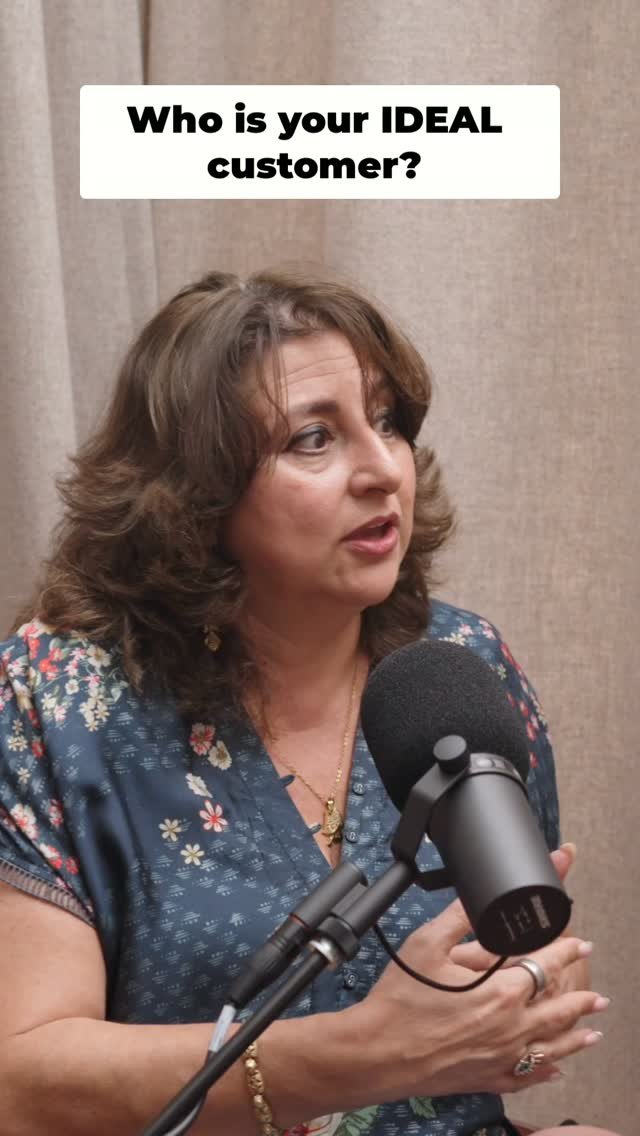
PeopleEconomics on Instagram · 5 Oct 2026
I remember being asked in a workshop, “Who’s your ideal customer?”
My answer was basically: everyone.
Technically, we could work with everyone. But that wasn’t the question.
Knowing who you *can* serve and knowing who you *want* to serve are two very different things.
View on Instagram
Leadership · 5 Oct 2026
Just because you can automate it doesn't mean you should
Just because something can be done doesn't mean it should be done.
This is the question of the moment, and almost nobody is asking it.
AI can screen your candidates. It can draft your performance reviews. It can analyse your team's communication patterns and flag who might be disengaging. It can generate the feedback, write the termination letter, run the whole process without a human touching it.
All of that is now technically possible. Almost none of it has been examined.
Because capability arrives long before wisdom does. And in the gap between the two, businesses do enormous damage while believing they are simply being efficient.
There is a version of this that predates AI by decades. The monitoring software. The productivity tracking. The approval chain that exists because it could be built, not because anyone asked what it communicates. Every one of those decisions was made on the basis of can we rather than should we, and every one of them sent a message to the workforce that nobody intended to send.
We do not trust you.
Here is what gets missed in the efficiency calculation. Every process in a business is also a communication. The termination letter written by an algorithm is efficient, and it tells every remaining employee exactly how people are regarded here. The feedback generated rather than considered saves twenty minutes and teaches a person that their development was not worth a human being's attention.
You can automate the task. You cannot automate what the task means to the person receiving it.
And the cost does not appear where the saving does. The saving shows up immediately, in a line item. The cost shows up eighteen months later in resignation patterns, in ideas that stopped being offered, in a workforce that concluded this place regards them as inputs.
None of this is an argument against AI or efficiency. I am genuinely enthusiastic about both, and the administrative work that machines absorb frees leaders for the work that actually matters.
But the question has to come before the capability, not after it.
So before the next thing gets automated, monitored, systematised or optimised, run one extra step. Not can we do this. What will this tell our people about how we see them?
If you do not like the answer, the efficiency was never worth it.
What has your business done recently simply because it could?
#PeopleEconomics #Leadership #FutureOfWork #FounderMindset #LeadershipDevelopment #AIatWork #TeamCulture
Get the weekly briefing
Instagram · 5 Oct 2026
This is the question of the moment. And almost nobody is asking it. 👀
AI can screen your candidates. Draft your performance reviews. Generate the feedback. Write the termination letter. Run the whole process without a human touching it.
All technically possible. Almost none of it examined.
Because capability arrives long before wisdom does. And in the gap between the two, businesses do enormous damage while believing they are simply being efficient. ⚠️
There is a version of this that predates AI by decades. The monitoring software. The productivity tracking. The approval chain built because it could be, not because anyone asked what it communicates.
Every one of those decisions was made on can we rather than should we.
And every one sent a message nobody intended to send. We do not trust you.
Here is what gets missed in the efficiency calculation. 🔑
Every process is also a communication.
The feedback generated rather than considered saves twenty minutes and teaches a person their development was not worth a human being’s attention.
You can automate the task. You cannot automate what the task means to the person receiving it.
And the cost never appears where the saving does. The saving is immediate. The cost arrives eighteen months later. ✅
So before the next thing gets automated or optimised, run one extra step.
Not can we do this. What will this tell our people about how we see them?
If you do not like the answer, the efficiency was never worth it.
What has been done recently simply because it could be? 👇
Follow @peopleeconomics for more on the belief that builds businesses.
View on Instagram
Culture · 4 Oct 2026
Rank your people against themselves, not each other
Comparison is the thief of joy. In a business, it is also the thief of performance.
Most leaders introduce it without realising, and almost none of them audit what it costs.
The leaderboard on the wall. The stack ranking. The quarterly comparison of who is at the top and who is at the bottom. It looks like healthy competition. It feels like accountability. And it is quietly teaching your entire team the wrong lesson about what the game is.
Because the moment performance becomes relative, people stop asking how good can I be and start asking where do I sit.
Those are completely different questions, and they produce completely different behaviour.
At the bottom, comparison kills effort. A person who has been visibly last for three quarters does not conclude that they should try harder. They conclude that the ranking is fixed and that effort does not change outcomes, which is the exact psychological pattern that produces learned helplessness. They stay, they comply, and they quietly stop reaching.
At the top, comparison does something subtler and more expensive. It converts a high performer from someone pursuing growth into someone defending a position. They stop taking the risks that made them good. They stop sharing what they know, because the person they would be helping is competing with them. Your best person becomes your least collaborative one, and everyone assumes that is just what excellence looks like.
The line creates a ceiling. Measure everyone against each other and the top of the list becomes the standard. Nobody reaches above it, because there is nothing above it to reach for.
Now change the measurement. Compare each person against their own trajectory. Their last quarter. Their developing capability. What they were capable of six months ago versus now.
Suddenly there is no ceiling in the room. Nobody is defending a position because there is no position to defend. The person at the bottom of the old list can have the best quarter in the business, because improvement is available to everyone at every level simultaneously.
And people start sharing, because helping a colleague improve no longer costs them anything.
Comparison hands your people a scorecard measured against each other. Growth hands them one measured against themselves.
Only one of those has room to keep going.
What is your business currently ranking that it should be tracking instead?
#PeopleEconomics #Leadership #TeamCulture #FounderMindset #BusinessPerformance #LeadershipDevelopment #HighPerformance
Take the free Morale Audit
Instagram · 4 Oct 2026
Most leaders introduce it without realising, and almost none audit what it costs.
The leaderboard. The stack ranking. The quarterly comparison of who is top and who is bottom.
It looks like healthy competition. It feels like accountability.
And it is quietly teaching everyone the wrong lesson about what the game is. ⚠️
Because the moment performance becomes relative, people stop asking how good can I be and start asking where do I sit.
Completely different questions. Completely different behaviour.
At the bottom, comparison kills effort. A person visibly last for three quarters does not conclude they should try harder. They conclude the ranking is fixed and effort changes nothing.
At the top, it does something subtler. It converts a high performer from someone pursuing growth into someone defending a position.
They stop taking risks. They stop sharing what they know, because the person they would help is competing with them. 🔑
The line creates a ceiling. Measure everyone against each other and the top of the list becomes the standard.
Now change the measurement. Compare each person against their own trajectory. Their last quarter. What they could do six months ago versus now.
Suddenly there is no ceiling. Nobody is defending a position because there is none to defend. ✅
Comparison hands people a scorecard measured against each other. Growth hands them one measured against themselves.
Only one of those has room to keep going.
What are you ranking that you should be tracking instead? 👇
Follow @peopleeconomics for more on the belief that builds businesses.
View on Instagram
Culture · 3 Oct 2026
Big words get ignored. Proof gets remembered.
Big words get ignored. Proof gets remembered.
Every business has the words. Integrity. Excellence. Innovation. People are our greatest asset. Chosen carefully, workshopped, printed, framed, and repeated at every all-hands.
And your people walk past them every day without reading them, because they worked out long ago that the words are not where the information is.
The information is in the proof.
The proof is what happened the last time someone lived the value under pressure and it cost the business something. The proof is who got promoted, and what that told everyone about what actually succeeds here. The proof is whether the high performer whose behaviour contradicts everything on that wall was addressed or protected.
Your people are not listening to your words. They are collecting your evidence.
And they are far better at it than most leaders realise. They know the exact moment the standard was quietly negotiated away. They remember which commitment was made and never mentioned again. They noticed that the survey asked for honesty and produced silence.
None of that gets said out loud. All of it gets filed.
Here is what makes big words worse than saying nothing. A word with no proof behind it does not land as neutral. It lands as a contradiction. You announced integrity, everyone watched you not apply it, and now the business has demonstrated something far more damaging than an absence of values. It has demonstrated that what leadership says has no relationship to what leadership does.
Words without proof do not build culture. They actively erode trust, because every stated value becomes a benchmark you will be measured against and found wanting.
This is why culture cannot be launched. You can launch a document. Culture is what gets built afterwards, in the slow accumulation of moments where the words either got backed or got exposed.
So before you write the next values statement or announce the next commitment, ask a harder question than does this sound right.
What will we actually do, visibly, that proves this?
If you cannot answer that, do not say it. Silence costs less than an unkept word.
What has your business said this year that it has not yet proved?
#PeopleEconomics #Leadership #OrganisationalCulture #FounderMindset #Values #LeadershipDevelopment #Trust
Get the weekly briefing
Instagram · 3 Oct 2026
Every business has the words. Integrity. Excellence. People are our greatest asset. Workshopped, printed,…
Every business has the words. Integrity. Excellence. People are our greatest asset. Workshopped, printed, framed, repeated. 👀
And people walk past them every day without reading, because they worked out long ago that the words are not where the information is.
The information is in the proof.
What happened the last time someone lived the value under pressure and it cost something. Who got promoted, and what that told everyone about what actually succeeds here. 🔑
Your people are not listening to your words. They are collecting your evidence.
And they are far better at it than most leaders realise. They know the exact moment the standard was quietly negotiated away. They remember which commitment was made and never mentioned again.
None of it gets said out loud. All of it gets filed. ⚠️
Here is what makes big words worse than saying nothing.
A word with no proof does not land as neutral. It lands as a contradiction.
You announced integrity. Everyone watched you not apply it. And now you have demonstrated something more damaging than an absence of values. That what you say has no relationship to what you do.
This is why culture cannot be launched. You can launch a document. Culture is what gets built afterwards. ✅
So before the next statement or commitment, ask a harder question than does this sound right.
What will we actually do, visibly, that proves this?
If you cannot answer, do not say it. Silence costs less than an unkept word.
What have you said this year that you have not yet proved? 👇
Follow @peopleeconomics for more on the belief that builds businesses.
View on Instagram
PeopleEconomics on Instagram · 2 Oct 2026
If the relationship is honest and transparent, you shouldn’t need to constantly look for warning signs.
Your people should feel comfortable telling you when something isn’t working, what they need and where things could be better.
That kind of relationship makes everything else easier.
View on Instagram
Instagram · 2 Oct 2026
Steve Jobs said focus is not about saying yes to the thing you have to focus on.
It is about saying no to the hundred other good ideas. 🔑
Note the word he used. Good.
Not bad ideas. Not distractions. Anyone can say no to those. Saying no to a bad idea is not discipline. It is basic judgement.
The hundred things competing for your attention right now are almost all genuinely worth doing.
That is exactly what makes them dangerous. 👀
I see this in businesses constantly. The initiative that would definitely help. The partnership that would definitely work. Every one defensible. Every one approved.
Eighteen months later they are running twelve good things at forty percent effort each and wondering why none of them produced anything.
Nobody made a bad decision. They made a hundred good ones. ⚠️
And businesses are extraordinarily good at starting things and almost incapable of stopping them.
Every initiative has a sponsor, a budget, a reputation attached. Killing it costs someone something. So it continues, quietly consuming attention, long after it stopped being the priority.
Most businesses do not have a focus problem. They have a subtraction problem.
The act nobody celebrates is closing something that is working reasonably well, because it is consuming the attention the extraordinary thing actually needs. ✅
Focus is not a schedule. It is a body count.
Look at everything currently running. How many are genuinely the priority?
What would it take to say no to the rest? 👇
Follow @peopleeconomics for more on the belief that builds businesses.
View on Instagram
Instagram · 1 Oct 2026
What you cultivate in private always shows up in how you lead.
Your reading shows in the quality of your thinking. Your discipline shows in your consistency. Your self-awareness shows in how you handle being wrong. 👀
But there is a version of this almost nobody talks about.
What you privately tolerate shows up in what everyone around you believes is acceptable.
The standard you quietly let slide when nobody would have noticed shows up months later as a culture that negotiates every standard.
The conversation you avoided because it was uncomfortable shows up as a team that avoids conflict.
The feedback you deflected alone, telling yourself they did not understand the full picture, shows up as a place where nobody can hear anything hard. ⚠️
None of those were public decisions. All of them became public conditions.
Leadership is not the performance you give in the town hall. It is the accumulated result of a thousand private reps nobody scored. 💪
The one who holds the line on a Tuesday with no audience is training something.
The one who sits with hard feedback alone, without deflecting, is building a capacity their team will feel for years.
Your people will never see those moments. They will only ever see the person those moments produced. 🔑
Pressure does not build capacity. It reveals it.
You will not rise to the occasion. You will fall to whatever you have been cultivating. ✅
What are you quietly cultivating right now? 👇
Follow @peopleeconomics for more on the belief that builds businesses.
View on Instagram
PeopleEconomics on Instagram · 30 Sept 2026
No two people are programmed the same way.
Good leadership starts with understanding that - and getting curious about the person in front of you, rather than expecting them to think like you do.
View on Instagram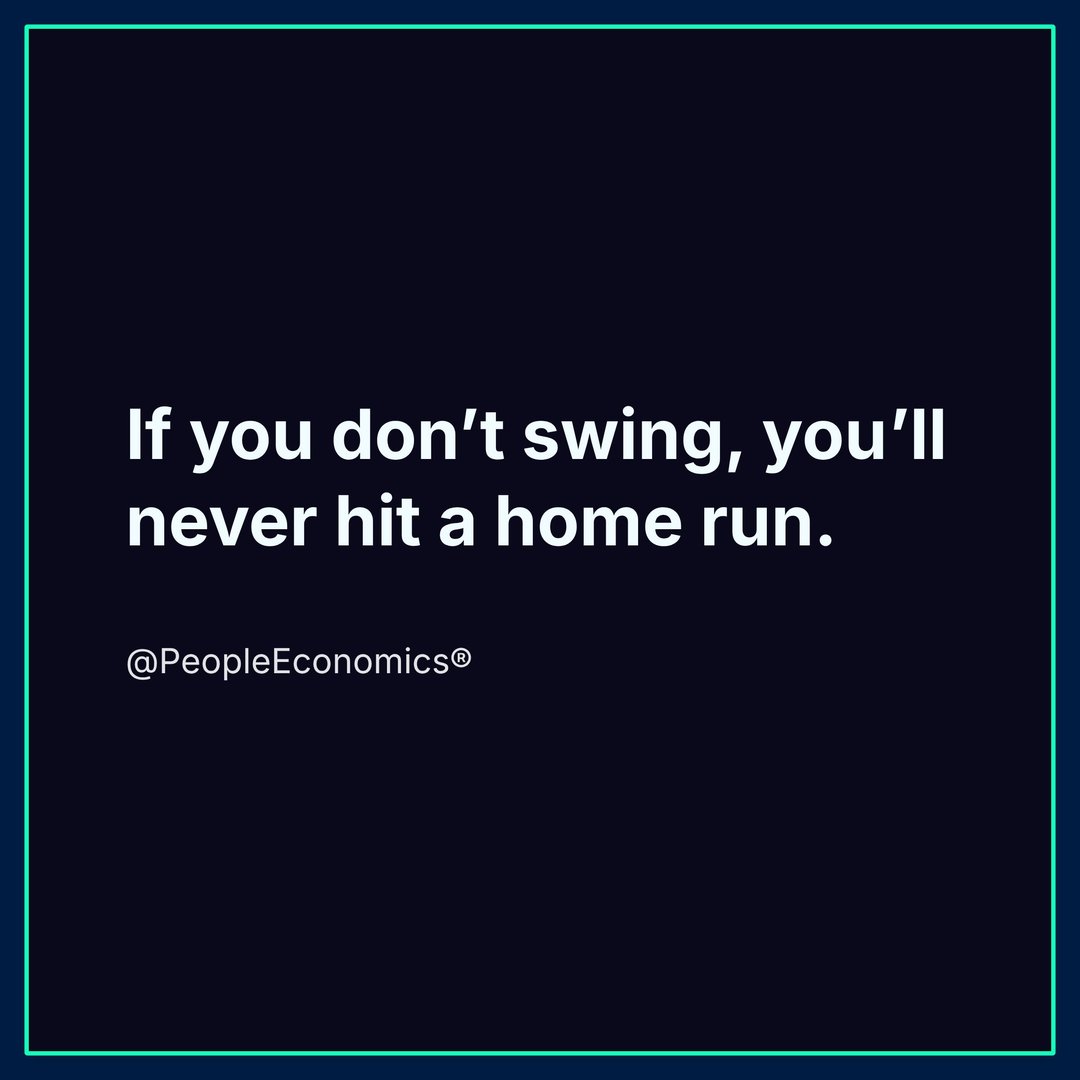
Instagram · 30 Sept 2026
Everyone accepts this. Then builds an entire life around not swinging.
Because not swinging never looks like fear from the inside. It looks like judgement. Timing. Waiting for the right pitch.
Some of that is genuine discipline. Most of it is fear with a respectable vocabulary. 👀
Run the mathematics.
A swing has two outcomes. You connect or you miss. The miss costs a strike and some discomfort. Both recoverable by the next at-bat.
Not swinging has one outcome. Guaranteed. Nothing.
The person protecting their average by never taking a real cut is not managing risk. They chose the certain zero over the possible something and called it prudence. ⚠️
I watched a talent show contestant once who was told they were holding back. Their explanation? Saving something for the next round.
Do you even know you are going to make the next round?
That is the anatomy of the unswung bat. Always a reason. Always a better pitch coming. Always a next round.
And the cost is brutally asymmetric. 🔑
The strikeout is a moment. The unswung bat is a life.
Ask anyone at the end of their career what haunts them. It is almost never the attempts that failed. It is the ones they never made.
Swing. Miss sometimes. Miss publicly.
That is the price of admission for everyone who has ever connected with anything. ✅
What have you been waiting for a better pitch on? 👇
Follow @peopleeconomics for more on the belief that builds businesses.
View on Instagram
Wall Street - Powered by PE on Instagram · 29 Sept 2026
Thank you to everyone who came along to celebrate the launch of PeopleEconomics®.
It was a special night to share the book with founders, leaders and friends who understand firsthand how much harder growth becomes when everything still runs through one person, and the conversations it sparked were exactly why Leah wrote it.
If you haven't picked up your copy yet, you can find it via the link in our bio.
View on Instagram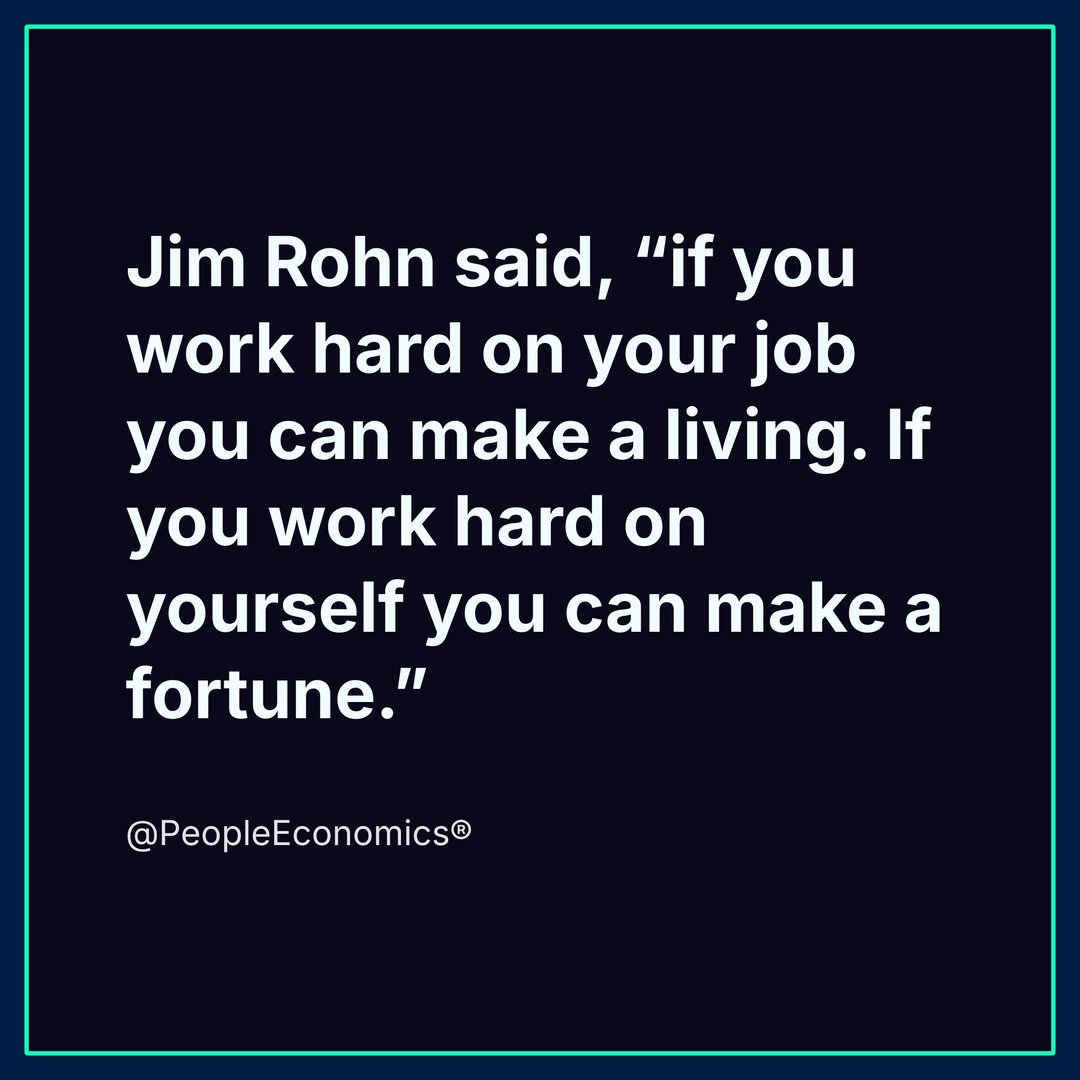
Instagram · 29 Sept 2026
I would put it differently. Working on your job is linear. Working on yourself is exponential. 🔑
The job has a ceiling written into it. A maximum amount of value the role can produce, no matter how hard you push.
Working on yourself has no such boundary. It changes what you are capable of bringing to every role, every conversation, and every opportunity that arrives afterwards.
At 16 I packed boxes in a warehouse at night. Working harder at that meant packing faster. That was the entire available upside.
What changed the trajectory was a question I asked every retailer who came to collect. How can I make your life easier?
That did not make me a better packer. It made me better at understanding what people actually need. A capability that has paid out in every single thing I have done since. ⚡
The packing was the job. The question was working on myself. Only one of those compounded.
And working on yourself is not just courses and reading.
It is the harder stuff. Finding out how you are actually experienced, not how you believe you are. Hearing difficult feedback without your ego shutting the door. Separating what you did from who you are.
Uncomfortable. Unglamorous. Almost never urgent. Which is exactly why so few people do it. ✅
Your job pays you for what you can currently do. Working on yourself changes what that is.
One is a wage. The other is a compounding asset.
What have you invested in your job this year that you have not invested in yourself? 👇
Follow @peopleeconomics for more on the belief that builds businesses.
View on Instagram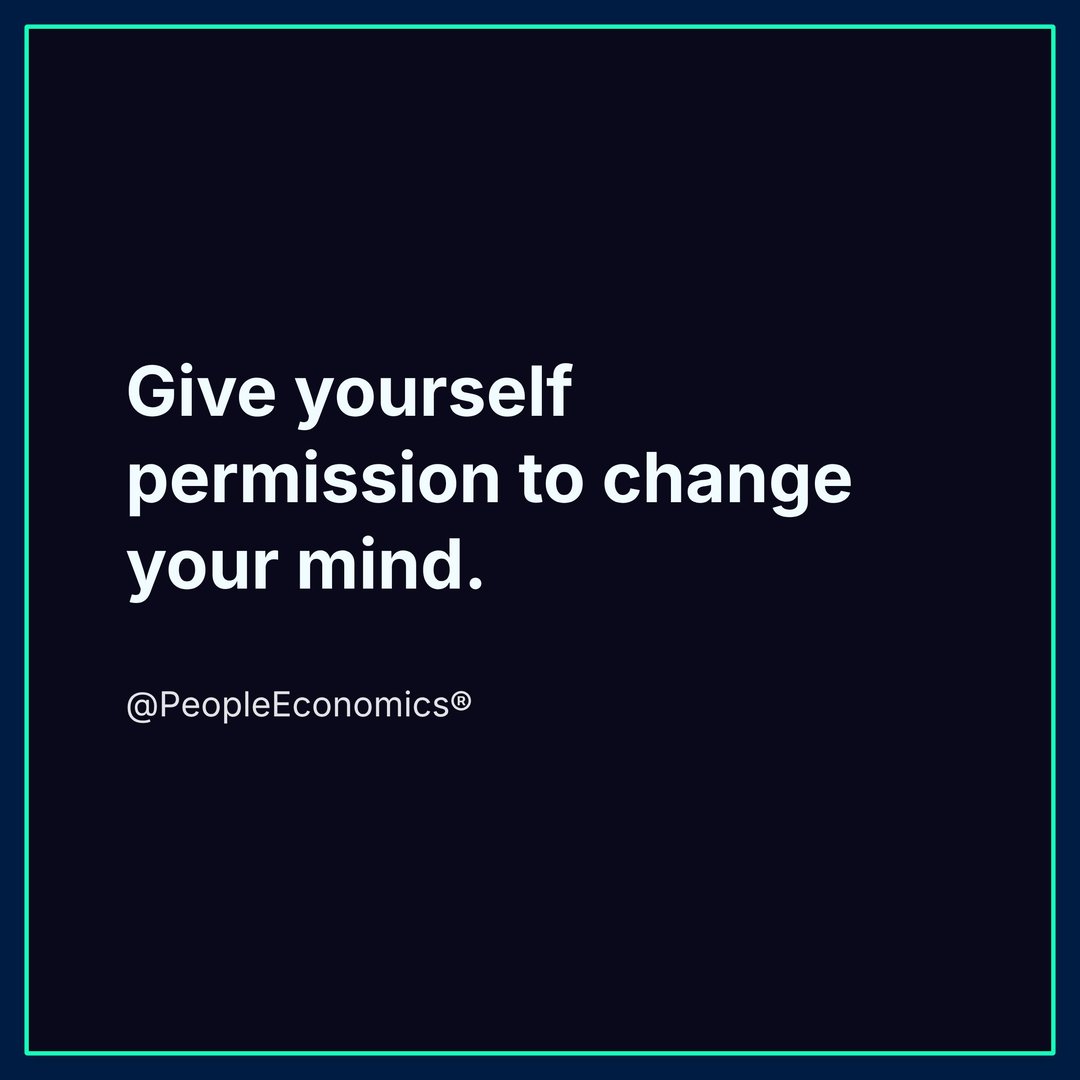
Instagram · 28 Sept 2026
We have built a culture where consistency is treated as integrity and revision is treated as weakness. 👀
The person who reverses a decision is accused of flip-flopping. The one who says I have thought about it differently is met with a silent recalculation of how much their word is worth.
So people hold positions long past the point of usefulness.
Not because they still believe them. Because changing publicly costs more than being quietly wrong. ⚠️
That calculation has destroyed more than bad ideas ever have. Bad ideas are cheap to fix. Bad ideas nobody is permitted to abandon become strategy.
The trap is this. The moment a position fuses with your identity, examining it feels like examining your worth.
So it gets defended instead of studied. And a position you defend teaches you nothing. 🔑
Real curiosity carries a price that performed curiosity never pays. The genuine possibility of being changed by the answer.
If your mind was never actually available for revision, the question was theatre.
So give yourself the permission explicitly, before you need it. Hold your conclusions like a working draft. Seriously. And ready to revise.
Here is the test. Name the last significant thing you changed your mind about.
If nothing comes, you have not been holding positions with conviction. You have been holding them with your ego. ✅
Changing your mind is not a failure of your previous thinking.
It is proof your thinking is still running.
What are you defending that you no longer actually believe? 👇
Follow @peopleeconomics for more on the belief that builds businesses.
View on Instagram
Instagram · 27 Sept 2026
Not your industry’s. Not your family’s. Not the ones you inherited from people who no longer get a vote in…
Not your industry’s. Not your family’s. Not the ones you inherited from people who no longer get a vote in how your life goes.
Yours. 🔑
Most people never separate these. They spend decades performing to a standard they never consciously chose.
Then the promotion arrives. The target lands. The recognition comes. And underneath sits a quiet flatness nobody talks about.
Because the scoreboard said this was supposed to feel like something. ⚠️
It did not feel like anything because the expectation was never yours.
I think about my mother on Chapel Street when I was eight, pointing at a woman stepping out of a luxury car. There is nothing that woman has that you can’t have.
What she handed me was not a target. It was permission. To set my own expectation rather than accept the one my circumstances had already written.
There are two failure modes. Both expensive. 👀
Living below your own expectations. You know what you are capable of. You are not doing it. And no external success will resolve that gap.
Living up to someone else’s. Externally successful. Internally hollow. Winning a game you did not choose.
The audit takes ten minutes and almost nobody does it. ✅
What do I expect of myself? Not what should I. What standard, chosen by me, would make me proud if I met it consistently?
At the end of it, no external scoreboard is going to be asking.
The only person who will ever know is the one who set them.
Whose expectations have you been running on? 👇
Follow @peopleeconomics for more on the belief that builds businesses.
View on Instagram
Instagram · 26 Sept 2026
One word separates those sentences. That word is the whole job. 🔑
You have met the first type. Everything runs through them. The approval, the decision, the answer. They are the centre of every conversation.
And they mistake the queue outside their door for evidence of their value.
It is not. It is evidence of a bottleneck with a title. ⚠️
The second type is harder to spot. Their fingerprints are deliberately faint.
You notice them in the room next door, not the room they are in. A team deciding without checking. A junior person speaking with unusual confidence. Someone describing a win and genuinely believing it was theirs. Because it was.
Your people know exactly which one they have.
They know it from who gets credited in the meeting. From whether their idea comes back improved or comes back as someone else’s.
And especially from what happens when they decide something without asking first. 👀
The manager who needs to be important says why did you not check with me.
The leader who makes people important says good, what did you learn. And the ceiling in that team moves permanently.
Importance is not a fixed quantity. Every time you hand it out, you have more of it. Not less. ✅
So the question is not whether your team thinks you are important.
It is whether they know they are.
When did you last make someone feel genuinely important and take none of the credit? 👇
Follow @peopleeconomics for more on the belief that builds businesses.
View on Instagram
Instagram · 25 Sept 2026
And it is far more common than failure. 👀
Failure at least announces itself. It arrives with feedback. Forces a reckoning. The person who fails knows something is wrong.
The person succeeding at the wrong things has no such alarm.
Every signal says keep going. The numbers are up. The title improved. The recognition arrived. The scoreboard is rewarding them handsomely.
And nobody stops to ask whether it was the right scoreboard. ⚠️
I once managed the hardest worker in the office. Elaborate systems. Immaculate desk. In early, stayed late.
She was genuinely excellent at preparing. Just excellent at preparing for calls that never happened.
Succeeding, visibly and effortfully, at everything that did not matter.
The personal version is quieter and more expensive. Because the professional scoreboard is loud, immediate and socially validated.
The other one, the health, the relationships, the reason you started, keeps no public score. 🔑
Which means you can win spectacularly on one while quietly losing on the other for years. And nothing will interrupt you.
So here is the audit. Ten minutes.
Write down what you are currently succeeding at. Then write down what actually matters to you. Not what should. What does.
Compare the lists honestly. ✅
Effort is not the problem for most high performers. Direction is.
Being exceptional at the wrong thing is not a smaller tragedy than failing at the right one. It is a bigger one. Because it takes so much longer to notice.
Are your two lists the same list? 👇
Follow @peopleeconomics for more on the belief that builds businesses.
View on Instagram
Instagram · 24 Sept 2026
Talent is a starting position. Choices are the entire journey. 🔑
I have watched extraordinarily talented people underperform for decades. And unremarkable people build remarkable things.
The pattern is so consistent it stopped surprising me a long time ago.
Talent gets you invited. Choices determine what happens once you are in the room.
The choice to stay when it would be easier to leave. To have the uncomfortable conversation. To ask the question nobody required of you. To do the unglamorous work on the day nobody would have noticed if you had not. 👀
When someone asked what made me good enough to set a national record, my honest answer was that no gift was involved.
What I had was a set of choices, repeated.
And here is why the talent story is so seductive and so damaging.
If success comes from talent, the outcome was determined before you started. Their results are unavailable to you by definition. You are excused from the attempt. ⚠️
The choice story is harder because it removes the excuse.
Your current position reflects the decisions you have made. Your next one reflects the decisions you are about to make.
Uncomfortable. Also the most empowering sentence available. Because choices are the one thing entirely within your control. ✅
Before 1954 every expert knew the four minute mile was impossible. Bannister chose to believe otherwise. Within three years, sixteen followed.
Their bodies did not change. Their choices did.
What choice have you been treating as a talent problem? 👇
Follow @peopleeconomics for more on the belief that builds businesses.
View on Instagram
Instagram · 23 Sept 2026
There is a conversation happening everywhere right now. And it is entirely one-directional. 👀 We need more…
There is a conversation happening everywhere right now. And it is entirely one-directional. 👀 We need more from you. Higher targets. Better results. More ownership. More initiative.
And the person on the receiving end is thinking something they will never say out loud.
With what?
Outcomes do not arrive from demand. They arrive from capability meeting opportunity. ⚠️
Ask for a different result every quarter for three years, and if nothing about their access, authority, development or exposure has changed, you are just asking the same person to try harder at the same ceiling.
An opportunity is the stretch project before it is technically earned. The decision handed over rather than retained. The room they are invited into. The skill developed before there was proof it would pay off.
None of those are rewards for outcomes already achieved. They are the inputs that make the next outcome possible. 🔑
Most businesses have the sequence backwards. Withhold the opportunity until the person proves they deserve it. The person, without the opportunity, cannot produce the proof.
Everyone stays exactly where they are. And the leader concludes they have plateaued.
They have not plateaued. They have been contained.
People rise to the size of the container they are given. Make the container bigger and watch what fills it. ✅
So before the next conversation about outcomes, audit what you have actually provided.
If nothing has changed on your side of the ledger, it is not a performance conversation. It is a leadership one.
What opportunity are you withholding while waiting for proof? 👇
Follow @peopleeconomics for more on the belief that builds businesses.
View on Instagram
Instagram · 22 Sept 2026
Most job ads are written for order-followers. And most leaders have no idea they are doing it. 👀
Read one. A list of responsibilities. A list of requirements. Tasks to complete. Reports to produce.
Nowhere does it describe a problem worth solving or what an exceptional person would actually do in this role.
Then we are surprised when the person who arrives does exactly what the document described. ⚠️
They are not disengaged. They are compliant.
We asked for a task-completer. We hired a task-completer. And now we want them to think like an owner.
At 16 I packed boxes in a warehouse. My job description would have read: take packing slip, fill box, move on. Written for an order-follower.
So I asked a question the job never required. How can I make your life easier? 🔑
Two weeks later my boss drove out at night to find out why customers were calling to say his best employee was the packer.
Same job. Same tasks. Completely different definition of what the job was for.
The difference between a problem-solver and an order-follower is rarely the person. It is what the environment defined, permitted and rewarded.
If initiative was ever met with why did you do that without asking, the lesson is learned permanently.
Then years later a leader says my people just do not take ownership. ✅
They took exactly the ownership they were given.
Are you hiring problem-solvers, then training them to follow orders? 👇
Follow @peopleeconomics for more on the belief that builds businesses.
View on Instagram
Instagram · 21 Sept 2026
Motivation is a feeling. And feelings are the least reliable operating system available to a human being. 👀
It arrives unpredictably, usually when things are already going well. And it vanishes precisely when you need it most.
Which means a life built on motivation is a life where the hardest days automatically become the least productive ones.
Exactly backwards. ⚠️
Discipline does not need you to feel anything. It runs on a decision made in advance, executed regardless of the weather in your head.
When someone asked what made me good enough to set a national record, my answer was consistency. Not leaving each day until I had done what needed to be done.
Notice what is absent from that sentence. Any reference to how I felt. 🔑
Most people imagine discipline as gritted teeth. White-knuckled willpower sustained forever.
It is not. Willpower is a battery and it drains.
Discipline is an architecture. The minimum you defined in advance so no bad day can make continuing unreasonable. The decision made once, on a calm day, so you never have to re-decide on a hard one.
Motivation asks do I feel like it. Discipline has already answered. ✅
And here is the irony. Discipline generates the thing people were waiting for.
Do the work unmotivated. Results appear. Results produce belief. Belief produces motivation.
The feeling arrives on the other side of the work. Not before it.
What are you currently waiting to feel like doing? 👇
Follow @peopleeconomics for more on the belief that builds businesses.
View on Instagram
Instagram · 20 Sept 2026
Four words that have carried more people through more difficulty than any strategy ever written.
And most of us only use half of them. 👀 In the hard season, it is a lifeline. The thing that collapsed. The person who left. The week where everything arrived at once.
This too shall pass. Not because the pain is not real. But because your brain, in the middle of it, will insist this is permanent.
It is not. It never has been.
I have needed those words. At 18, six months incapacitated after a car accident that took my plans, my relationship, and briefly my life. In that bed, permanent is exactly what it felt like.
It was not. 🔑
But here is the other half. The half almost nobody applies.
This too shall pass also applies to the good season.
The energy right now. The people around your table. The health you have. All of it is also passing. Right now. While you are busy waiting for the next thing. ⏳
That is not depressing. It is the most clarifying thought available.
Notice this. It is not permanent either. This exact version of your life will never exist again in exactly this form.
Applied only to the bad, the phrase is comfort. Applied to both, it becomes perspective. ✅
When it is hard, remember it is temporary. When it is good, remember exactly the same thing. And be present for it while it is here.
Which one do you need to hear right now? 👇
Follow @peopleeconomics for more on the belief that builds businesses.
View on Instagram
Instagram · 13 Sept 2026
At 16, packing boxes in a warehouse at night, I asked a question nobody required of me. I put it to every…
At 16, packing boxes in a warehouse at night, I asked a question nobody required of me. I put it to every retailer who collected an order.
How can I make your life easier? 🔑
Two weeks later my boss drove out at night to find out why customers were calling about the packer.
Everything that followed traces back to versions of that one question.
The unasked question is the largest unmined resource in any life.
The salesperson who does not ask for the order, and never learns the client was ready. The person who does not ask for the role, and watches it go to someone who simply raised their hand. The question in the meeting that everyone is wondering and nobody is saying. 👀
In every case, the answer existed. Fully formed. Sitting in someone else’s head. Available.
The only thing in the way was a sentence someone chose not to say.
Why do we stay silent? Because asking risks a no. And a no feels like evidence about us. So we protect ourselves from the answer by never collecting it. ⚠️
But run the mathematics.
The unasked question has a guaranteed outcome. Nothing.
The asked question has two outcomes. And one of them changes everything. A no leaves you exactly where you were. A yes opens a door that was never going to open itself. ✅
You are not protecting yourself by not asking. You are choosing the no in advance, on the other person’s behalf.
The people who get more are rarely more deserving. They are more asking.
What have you been choosing not to know? 👇
—
Follow @peopleeconomics for more on the belief that builds businesses.
View on Instagram
Instagram · 11 Sept 2026
I mean that as good news. Stay with me. 👀
Somewhere along the way, specialness became the story we tell about achievement. The founder was a visionary. The record-breaker was born different. They had a gift.
I have set national records. And I can tell you what was behind it.
Nothing special.
When someone asked what made me so good, my honest answer was that I am not. What I had was brutally unremarkable. Consistency. Not leaving each day until what needed to be done was done.
Anyone could have done it. Almost nobody was willing to. 🔑
The specialness story is a cage. And it traps you in both directions.
If they are special and you are not, trying is pointless. You are excused from the attempt. And excused from the life the attempt would have built.
If you decide you are the special one, it is worse. Now every failure is an identity crisis. Every piece of feedback is a threat. Defending specialness consumes the exact energy improvement requires. ⚠️
Drop the story and something opens up.
If nobody is that special, results come from what people do, not what they are. All of it learnable. All of it available.
The four minute mile was impossible until one man ran it. Within three years, sixteen more followed. Their bodies did not change. The story did. ✅
You do not have to be a genius. You have to be consistent, honest about what needs doing, and willing to do it on the days you do not feel like it.
Ordinary people, doing that, produce what the world later calls special.
What have you been excusing yourself from because someone else seemed born for it? 👇
Follow @peopleeconomics for more on the belief that builds businesses.
View on Instagram
Instagram · 10 Sept 2026
It appears on CVs as a skill. It gets praised in interviews. Entire careers are built on the performance of…
It appears on CVs as a skill. It gets praised in interviews. Entire careers are built on the performance of doing many things at once.
But your conscious mind can only process a fraction of what is in front of it. It does not multitask. It switches. Rapidly, expensively, and badly.
Every switch has a cost. Close one context. Load another. Find your place. Rebuild the thread.
The person proudly doing five things at once is not doing five things. They are doing fractions of five things, badly, while feeling extremely busy. ⚠️
I once worked with the busiest person in the office. Elaborate systems. Constant motion. Terrible results.
The fix was not more effort. It was collapsing her attention onto the one activity that actually produced results. And treating everything else as what it was. Noise wearing the costume of work. 🔑
Divided attention is not generosity. It is dilution.
The report written while answering messages takes twice as long and lands half as well. The conversation held while checking a phone builds nothing.
One thing at a time is not a limitation. It is how excellence actually gets manufactured.
Full attention. Single point. Completed. Then move. ✅
So look at today’s list. Not the whole list.
The one thing that would make everything else easier or unnecessary.
What would happen if it got all of you? 👇
—
Follow @peopleeconomics for more on the belief that builds businesses.
View on Instagram
Instagram · 9 Sept 2026
Everyone talks about consistency like it is a personality trait. Some people have it. Most do not.
Wrong. Consistency is not a trait. It is an architecture. And the foundation is a number most people have never set. 👀
The minimum.
Here is the pattern that kills most ambitions. A person commits at maximum. The full workout every day. The perfect routine. And it holds, right up until the first bad day.
The maximum becomes impossible. And because no minimum was ever defined, the choice collapses to all or nothing.
They choose nothing. One missed day becomes a missed week. The identity shifts from someone who does this to someone who used to. ⚠️
The ambition did not die of difficulty. It died of a missing definition.
The minimum is the version of the standard that survives your worst day. Not the aspiration. The floor. Ten minutes instead of the hour. One call instead of twenty. Small enough that no circumstance makes it unreasonable. Real enough to keep the chain intact. 🔑
My best results were never built on my best days. Best days take care of themselves.
They were built on the worst days. Where the minimum held the line.
Consistency is not the discipline to perform at maximum forever. Nobody does that.
It is the wisdom to define a minimum so durable that stopping never becomes the default. ✅
So take the thing you keep restarting.
What is your minimum? If you cannot answer in one sentence, you have found the reason it keeps collapsing. 👇
Follow @peopleeconomics for more on the belief that builds businesses.
View on Instagram
Instagram · 8 Sept 2026
Congratulations Lauren Fraser, 6 years has flown. Thank you for your support, dedication and hard work. We…
Congratulations Lauren Fraser, 6 years has flown. Thank you for your support, dedication and hard work. We are lucky to have you!
Our tenure program saw Lauren receive her company car for 6 years of service!!
View on Instagram